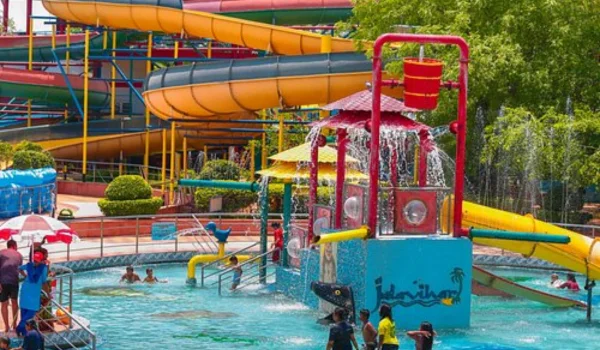
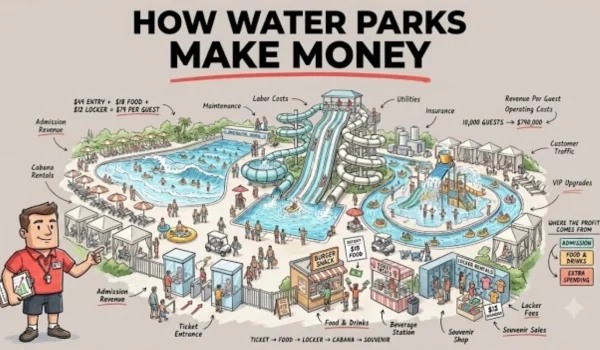
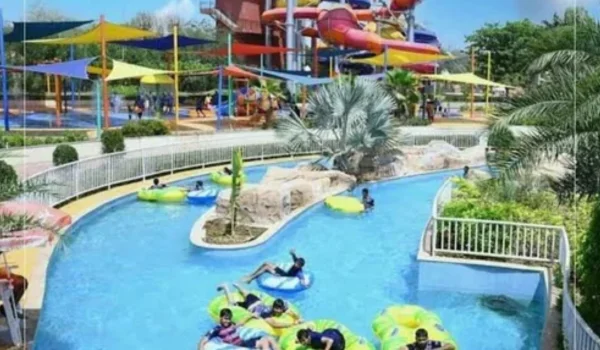
There is no single fixed land requirement for every water park in India. The required area depends on the size of the park, number of rides, expected visitor capacity, parking, food courts, changing rooms, landscaping and future expansion plans.
As a practical planning range, a small/compact water park may work on around 2–5 acres, a medium-sized park generally needs around 5–15 acres, while a large destination-style water park can require 20 acres or more.
Interestingly, some government tourism guidelines have used 5 acres (about 20,000 sq. m.) as a minimum plot area for a water park meeting specified criteria, although this should not be interpreted as a universal national requirement for every project.
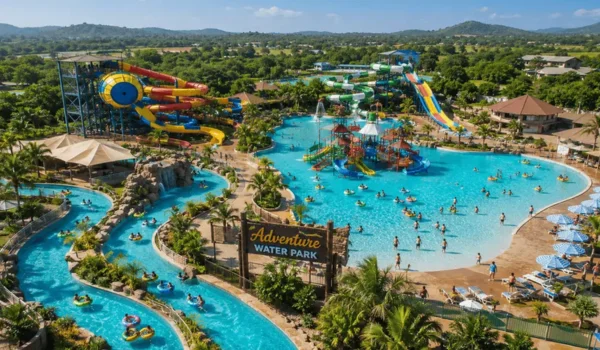
Water Park Land Requirement by Size
| Water Park Type | Approx. Land Requirement | Suitable For |
| Compact / Mini | 2–5 acres | Limited rides, local visitors |
| Small–Medium | 5–10 acres | Family water park |
| Medium | 10–15 acres | Multiple rides + larger facilities |
| Large | 15–25 acres | Destination water park |
| Large + Resort/Entertainment | 20+ acres | Integrated leisure destination |
These are planning ranges, not mandatory standards.
A published Indian water-park project report, for example, models a water park on 5 acres, while another amusement-park-cum-water-park project uses 10 acres.
Is 2–3 Acres Enough for a Water Park?
Yes, potentially—but it would need to be a compact concept.
With 2–3 acres, you would have to carefully prioritize:
- Swimming pool
- Children’s water zone
- A limited number of slides
- Changing rooms
- Toilets
- Small food area
- Ticketing
- Basic parking
- Plant room
- Safety and circulation areas
You would have considerably less space for large attractions such as a major wave pool, lazy river or multiple large slide towers.
For a more comfortable family-oriented park, 5 acres or more gives considerably more planning flexibility.
Why Does a Water Park Need So Much Land?
The pools and slides are only part of the project.
A proper master plan also needs space for:
- Water Attractions
This includes:
- Water slides
- Wave pool
- Lazy river
- Kids’ pool
- Splash zones
- Rain-dance area
- Activity pools
- Visitor Facilities
You need space for:
- Changing rooms
- Lockers
- Toilets
- Showers
- First-aid facilities
- Rest areas
- Food courts
- Restaurants
- Parking
Parking can consume a surprisingly large portion of the site, particularly when the park is designed for hundreds or thousands of visitors.
This is one reason why simply calculating the area occupied by pools and rides will underestimate the actual land requirement.
- Circulation & Queues
Visitors need safe pathways between attractions.
There also needs to be adequate space around:
- Slide exits
- Pools
- Ride queues
- Food areas
- Changing facilities
- Emergency access routes
- Landscaping
Landscaping can improve the visitor experience and provide:
- Shaded areas
- Seating
- Green spaces
- Walking paths
- Decorative features
Example: 5-Acre Water Park
A 5-acre site provides approximately 217,800 sq. ft.
A conceptual allocation could look something like:
| Area | Approximate Share |
| Pools & water attractions | 30–40% |
| Buildings & visitor facilities | 10–15% |
| Parking | 15–25% |
| Circulation & queues | 10–15% |
| Landscaping/open areas | 10–15% |
| Service/utilities | 5–10% |
These percentages are conceptual planning figures, not a prescribed Indian standard.
The exact allocation should come from the master plan because parking requirements, local development rules, fire access, setbacks and site conditions can significantly change the layout.
Example: 10-Acre Water Park
A 10-acre site gives you much more flexibility.
You could potentially accommodate:
- Multiple water-slide towers
- Large wave pool
- Lazy river
- Dedicated children’s zone
- Food court
- Larger changing facilities
- Ample parking
- Landscaping
- Event/party area
- Staff and maintenance facilities
- Future expansion
An Indian DPR for an amusement park-cum-water park specifically uses 10 acres and estimates total capital investment of ₹16.62 crore for that particular project configuration.
What About a 20-Acre Water Park?
At around 20 acres, the project can move toward a destination-style concept.
There can be room for:
Water Park + Entertainment + Food + Events + Resort
This is particularly useful if the developer wants visitors to spend several hours—or even an entire day—at the property.
For comparison, one Indian investment-planning study identified 20–30 acres as an appropriate size for a broader theme-based leisure park concept, showing how land requirements increase when attractions and supporting facilities are expanded.
Don’t Forget Future Expansion
One of the biggest mistakes when buying land is planning only for today’s attractions.
Suppose you build your initial water park on 5 acres and later want to add:
- New slides
- Wave pool
- Resort
- Adventure activities
- More parking
- Restaurants
- Event facilities
You may find yourself with no room to expand.
Therefore, if the budget permits, purchasing a larger contiguous parcel can provide a strategic advantage.
Location Can Matter More Than Having More Land
A 20-acre water park in a poorly connected location may perform worse than a 5-acre park located close to a large population center.
When selecting land, evaluate:
- Road connectivity
- Distance from major cities
- Nearby population
- Tourist traffic
- Public transport
- Parking access
- Electricity availability
- Water availability
- Drainage
- Land-use permissions
- Flooding risk
- Competition
Water availability deserves particular attention. A government tourism study of Gujarat documented operational problems at some water parks because of water shortages, including reliance on tanker-supplied water.
So, How Many Acres Should You Buy?
A practical rule of thumb would be:
2–5 acres → Compact water park
5–10 acres → Small/medium family water park
10–15 acres → Larger water park with multiple attractions
15–25+ acres → Destination-scale water park
20+ acres → Water park with significant expansion/resort/entertainment potential
If you’re starting from scratch and want a proper family-oriented water park rather than a very compact facility, 5–10 acres is a sensible range to investigate first. For a major destination park, look beyond 15–20 acres.
Most importantly, don’t purchase land based solely on acreage. Get a professional master plan prepared first so that the land parcel can accommodate the attractions, parking, visitor circulation, utilities, safety requirements and expansion you actually intend to build.